10/06/2007

Augusta Maine Report, 100507


1.I have the day off Saturday.


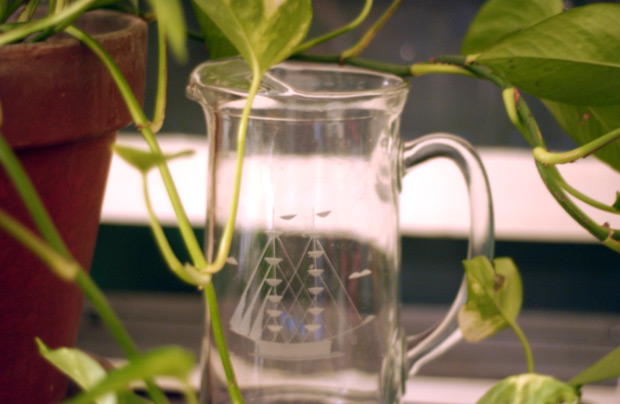
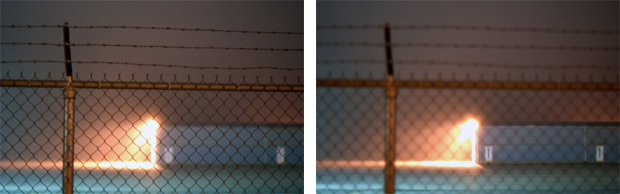
2.The Mokey's Pitcher: This is a pitcher of the Mokey brother's: Johnathan, Andrew, Matt. Their parents were giving this pitcher away when they moved a couple years ago. (I own your childhood.)


3.David Shrigley: My advertisement for the new David Shrigley CD and book.

10/05/2007

Augusta Maine Report, 100407


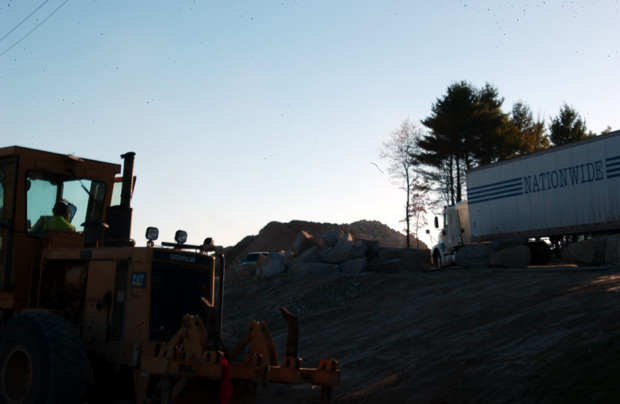
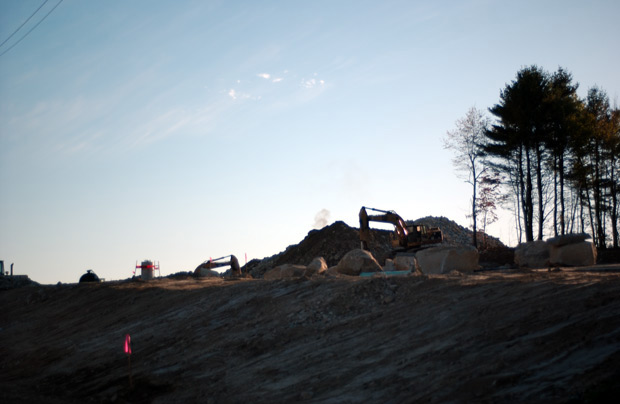
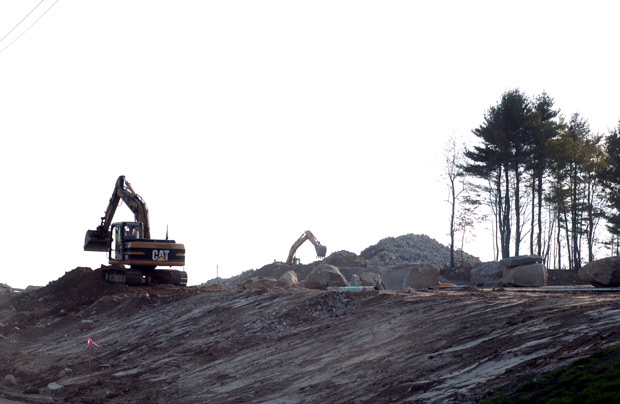
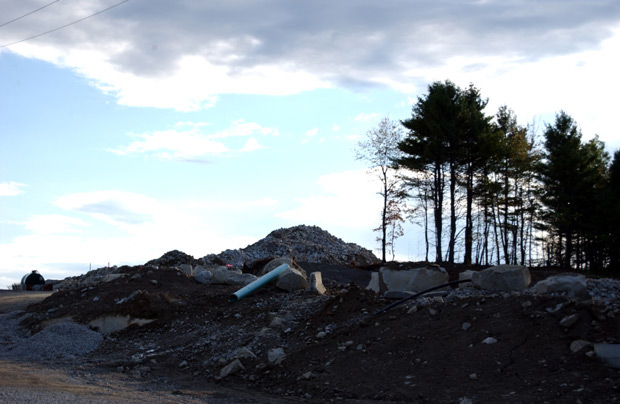
1.Development on Western Avenue in Augusta, Maine (Oct. 4, 2007)


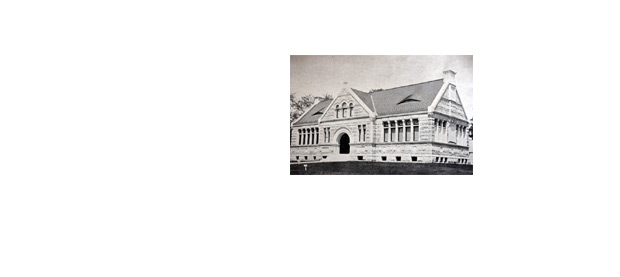
2.Photo and text taken from: Augusta Centennial Souvenir issued by the Daily Kennebec Journal, Augusta, Maine, June, 9, 1897-

The Lithgow library was opened to the public in rooms on Water street, September 23, 1882. It had its beginning in the Augusta Literary and Library Association, chartered 1873, and in the handsome bequest of Llewellyn W. Lithgow upon his death in 1881. He left the city $20,000 for the purpose of founding a public library, and also made the city in part residuary legatee by which about $15,000 was realized and made the basis of a building fund. Hon. J. W. Bradbury has been president of the trustees, since the founding of the library, and for the same length of time Miss Julia M. Clapp has been librarian.
The present elegant library building on Winthrop square, at the corner of State street was erected in 1894-5, the corner stone being laid with elaborate ceremonies, June 14, 1894, and it was dedicated February 3, 1896. It stands upon the site of the old Cushnoc house which was erected in 1803. The building cost $41,000 and the lot about $10,000. Among the contributors the largest was Andrew Carnegie of Pennsylvania who gave $9,000. Five others, Mrs. Henry W. Fuller, Mrs. Emmons Blaine, Horace Williams, Charles Alden and Emory A. Sanborn gave $1,000 each, $12,000 was obtained from the memorial alcoves. The rest came in smaller contributions and from the Lithgow estate under the residuary clause.
The building is 96x40 feet, and is an artistic and elegant structure. The interior finish is of oak, the shelves being of steel with a capacity for 16,000 volumes. The building is absolutely fireproof. The large hall of the second story is used by the Kennebec Antiquarian society. The library now has about 8,000 volumes. The public reading room occupies the eastern end of the building.


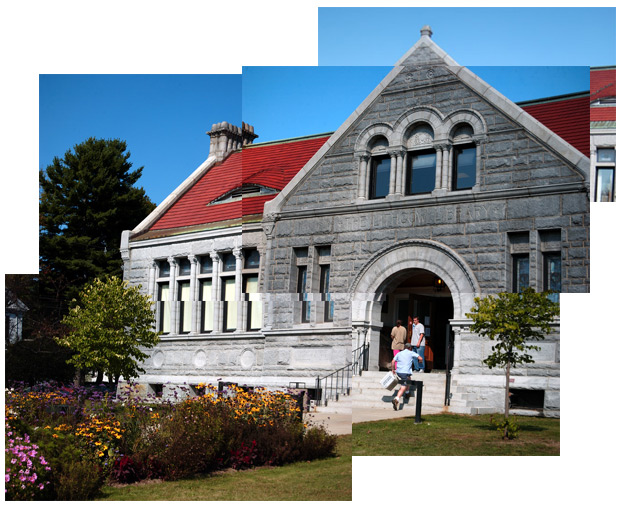
3.I'm Proud to Say: I am an official readers card carrier of the Lithgow Public Library & Reading Room. (I really like that '&' in their title; it makes it a little poetic.) The library has expanded since the above text was written over 100 years ago. They are planning another expansion, which I believe the figures were around $20 million (correction: $9 million), if I remember correctly from an article in the Kennebec Journal last month.
Wow. Forty-one thousand dollars for the beautiful original structure!? They just didn't know what a deal they were getting back then. Or were they so forward looking that they did?
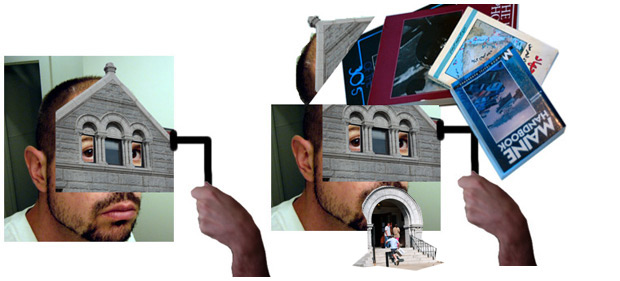
I wish I could be that forward thinking. Someday. Someday I'll be adjusting my cheap sunglasses like they're spectacles on a head of wisdom. (Maybe I'll try that today.)


4.Lithgow Library & Reading Room:I love the Lithgow Library so much, and public libraries in general, that I might just be the Lithgow Library & Reading Room for Halloween!
In fact, everyone should be their local public library, or Nixon for Halloween this year.

10/04/2007

Augusta Maine Report, 100307


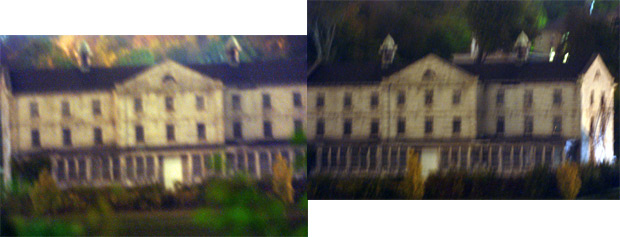
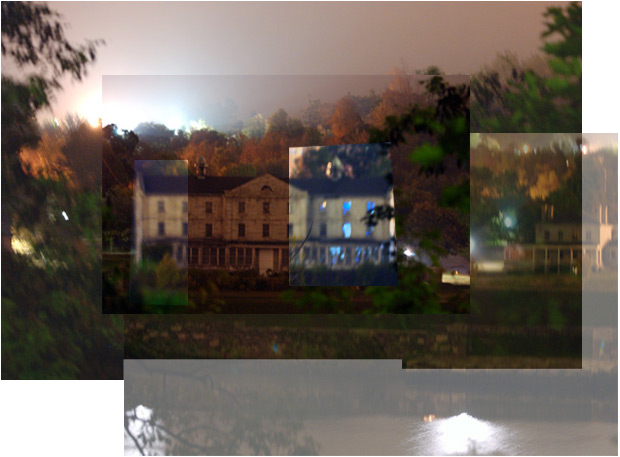
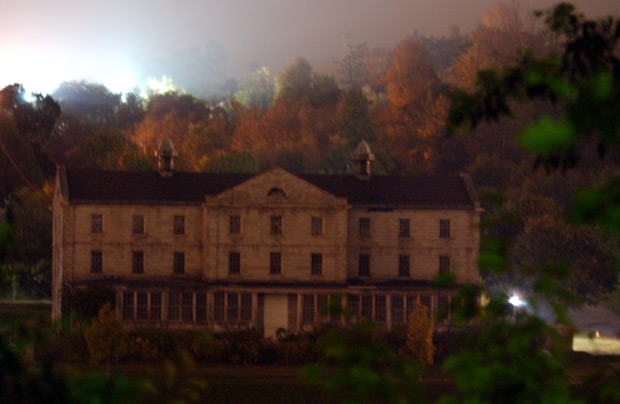
Night Walk: Last night when I got home from work I was still feeling awake. I took a walk (Could also be called 'dodging skunks' at this hour, ex. "Crap! I'm out of cigarettes. Well, I guess I'll just 'dodge skunks' down to the Cumby's [Cumberland Gas Station] and get some.") down to the Kennebec River Rail Trail. While I was taking photos of the old Kennebec Arsenal, I was thinking about it's history, our history. And I was thinking about mans' departures, and returns to the woods.


Is the city the 'concrete jungle?' Are European forests the 'white mans' jungle?' Like the Serengeti is the 'black mans' jungle,' the Saharan the 'Arabic mans' jungle,' the Himalayas the 'Asian mans' jungle,' the Americas ... the 'Native American mans' jungle,' the jungle the 'Indonesian mans' jungle' ... Yeah.


It seems like, at almost every point in our history, we are in the process of destroying our predators either for security or for food. Because of geographic reasons and chance some of us got further along than others. The outcomes: the endangered species, Nintendo, the Internet, the Industrial Revolution, this Iraq war, duct tape, genocide, etc., etc.
The main predator, man, just keeps multiplying the more we kill. Like a sci-fi disease or something.


The act establishing an arsenal at Augusta "for the safe keeping of arms and munitions of the United States for the northern and eastern frontier," passed Congress and became a law March 3, 1827, only 10 days after Governor Lincoln had signed the act making the town the state capital. The lot of 40 acres, a beautiful area on the east shore of the river, was soon secured, and on July 14, 1828, the corner stone of the main building was laid. Soon 15 buildings were erected, 10 of stone, all built in a thorough and permanent manner.
During the Mexican and civil wars it was made the depot of valuable military stores, and large quantities of fixed ammunition were prepared here and forwarded to the seat of war. Among the commanders of the arsenal have been General O. O. Howard and Lieutenant Anderson, the hero of Fort Sumter. The present commander is Major John R. McGuinness. Fifteen officers and men are now stationed here.
As a military post the Kennebec Arsenal would not prove of great value in time of war, as it is without means to resist much of an attack. War however is not a serious probability of the future.

-Daily Kennebec Journal, June 9, 1897

10/03/2007

Augusta Maine Report, 100207


1.Development on Western Avenue in Augusta, Maine (Oct. 2, 2007)


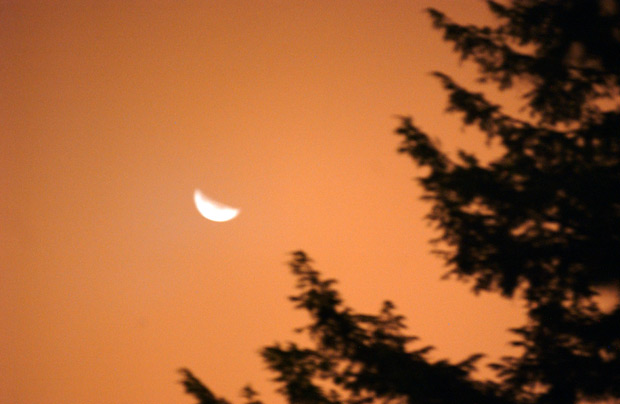
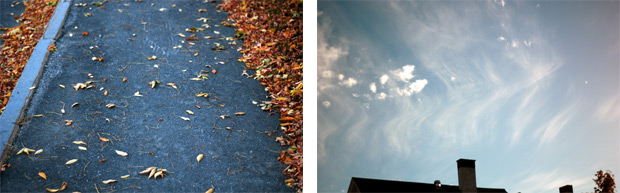
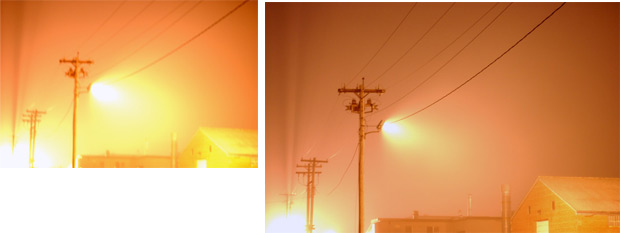
2.Weather Report: In Maine, as far as weather, we're having leaves on the sidewalks & High Wisping Northern Clouds to the left ...


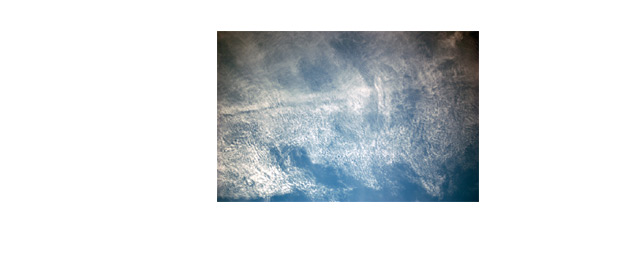
... and holy crap! Thats' the highest cloud I've ever seen. It might be in space.


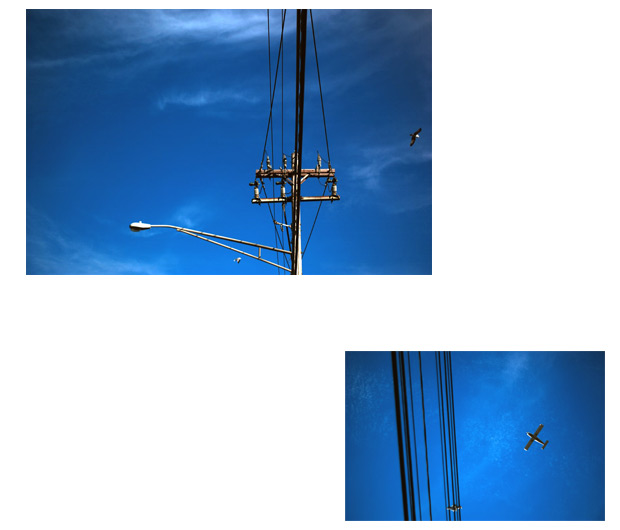
Also: The sea gulls are playing in the rush-hour air drafts above Western Avenue. (Some of these gulls are HUGE.)


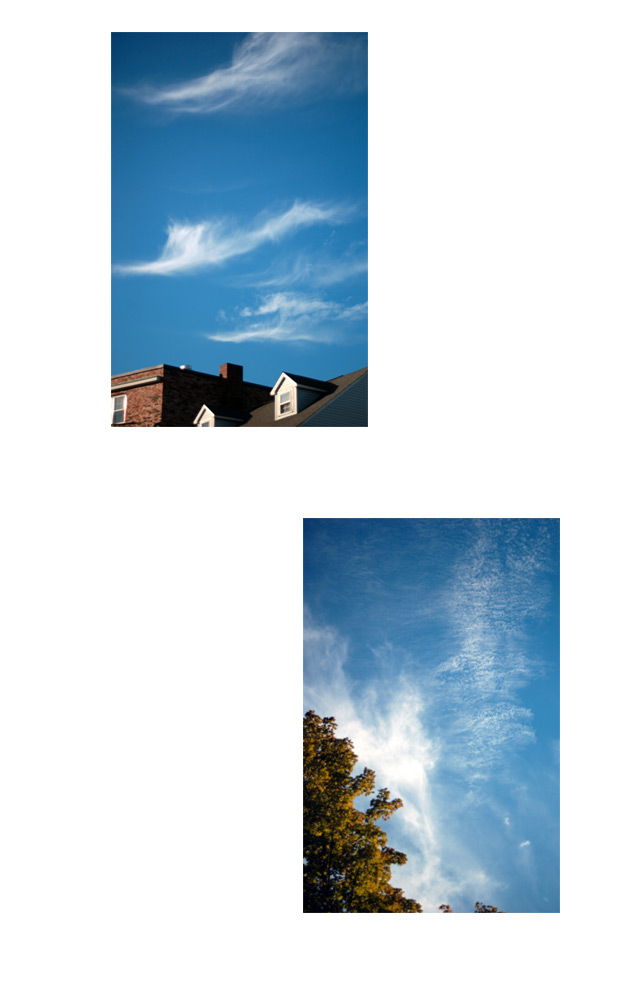
3.Equivalents:That's what one of the most well-known-photographers-ever called his photos of clouds, equivalents. Alfred Stieglitz said each one of them represents a different mood. Possibly the mood of the photographer at the time of the taking?
These equivalents of mine are slightly different. They are grounded by earthly objects; trees, houses. Plus, Stieglitz shot in black & white. That's the only reason his photos hold much more value than mine. Really.


4.Neighborhood Watch: A thought came across my mind as I was running along the Kennebec River Rail Trail the other day, 'Do the people in power of less populated areas of the U.S. (like Maine) have an easier time taking advantage of their constituents and the resources?'


From what I hear the politicians are pretty straight forward about the preserving of Maine's natural resources. They even have, get this, get ready for it, here it comes, conservative-environmental activists!

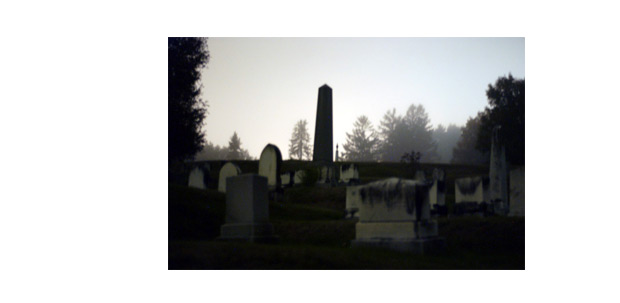
5.Mount Hope Cemetery: I love to walk in the misty cemetery at night. Listening to Celtic music and southern spirituals on my i-Pod. I feel like I'm entertaining the dead with my company; or that they are entertaining me.


10/02/2007

Augusta Maine Report, 100107


1.Development on Western Avenue in Augusta, Maine (Oct. 1, 2007)


2.I Live Between good and evil. It appears the devil is my neighbor. And he has a dirt bike.


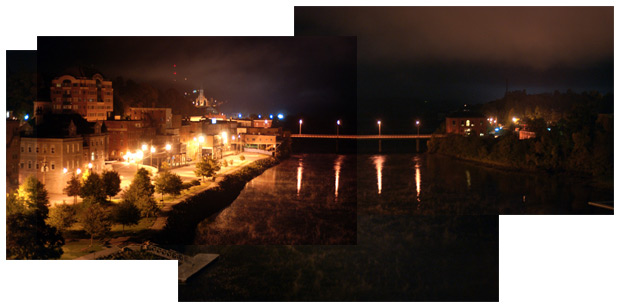
3.Took a Detour last night walking home from work. I could see mist rising off the Kennebec River and over the city and walked to the Memorial Bridge.


4.Salt Water Air, I could smell it when I was on the bridge. I didn't think salt evaporated? And I thought that the sense of smell came from tiny particles in the air?


5.Augusta Lodges are nearly everywhere here. That's what I like to call these over-sized storybook houses packed with apartments, lodges. I named my own building, which has four apartments, The Weston Street Lodge.
(I sent a message to one of my landlords not thinking about 'The Weston Street Lodge' in my email signature. She liked it.)


6.Could One think that the less people there are, the more beautiful a place might be? Not I?

10/01/2007

Lovejoy Convocation, Colby College


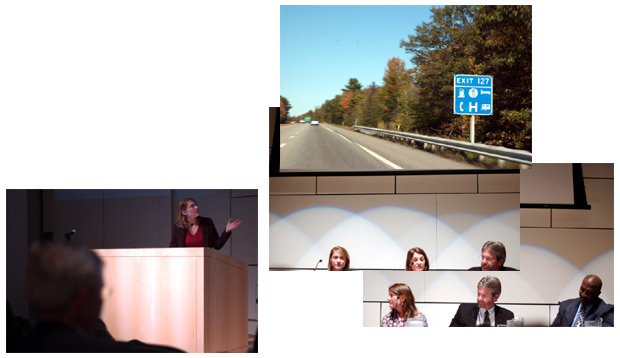
Lovejoy Panel: I went to the Elijah Parish Lovejoy Award ceremony at Colby College, about 20 minutes north of Augusta in Waterville, Maine. (Exit 127 on I-95; that is 127 miles into Maine according to the new mile marker/exit numbering system.) Every time I drive somewhere I think, 'do I really need to go there' or 'do I really need to drive.' I thought that going up to Colby for this event might be worth the death I cast on the future by burning fuel. I was right.
First was a panel discussion on the Iraq war with Andrea Bruce (Woodall), Washington Post photographer, Christine Spolar, Chicago Tribune foreign correspondent extrodinare, Bill Nemitz, Portland Press Herald correspondent, and overseeing the panel Gregory L. Moore, Denver Post editor.
It was interesting to hear the stories of journalists who had made repeated trips to Iraq. They all had a slightly different take on 'the mess.'
And Andrea Bruce had some nice pictures, however I had already looked at them earlier online. I was only really interested in talking to Andrea after the panel. And I just wanted to talk about D.C. I found out she didn't live in D.C. (somewhere in Maryland I think), and I asked her to bring me some chicken from Pollo Sabroso (Peruvian chicken from my old neighborhood of Mount Pleasant) next time she comes up. She may not know where that is, but she should.
Check out the podcast.


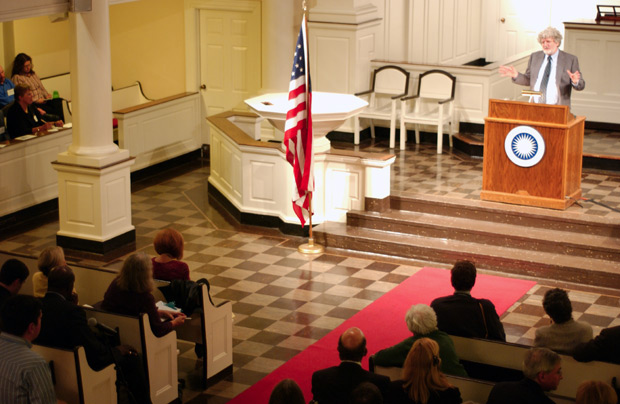
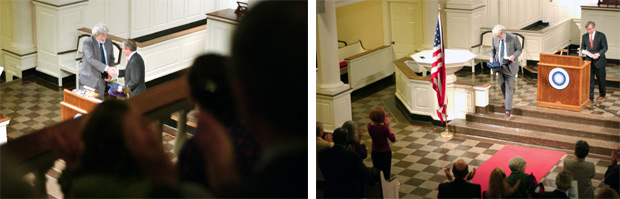
John Burns: John Burns, senior foreign correspondent for The New York Times, claimed that journalists were not the best public speakers. He must not have been talking about himself. This man has ka-knowledge. About media coverage in Iraq. And he was dropping it last night at Colby College's chapel. And he is very well-spoken for a Brit. Although, he himself admitted, he needs a haircut. Really.
Check out the podcast.


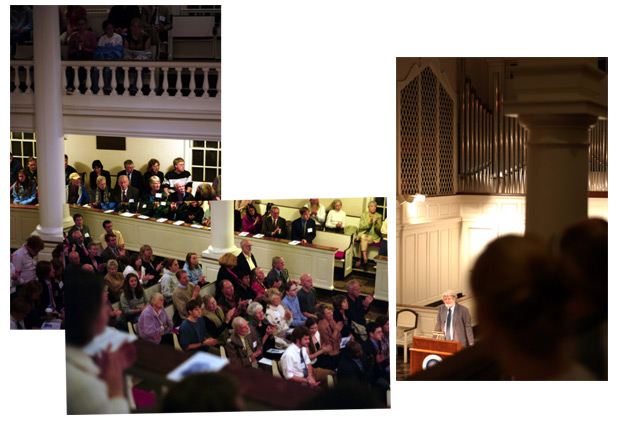
Packed for Convocation: I can't see that little chapel at Colby being much more full. But as honoree John Burns said, we were really there to celebrate the memory of poet, abolitionist, newspaperman, and all-around good guy Elijah Parish Lovejoy who was killed by racists 170 years ago while defending his printing press. Lovejoy was from here. Awesome! I definitely need to learn more about this man.


Overall: I am smarter now for having attended the Lovejoy Convocation. Plus, I got a couple free beers (Shipyard Beer from Portland, Maine), and from the kindness of one of my unmet colleagues who couldn't make it, a free dinner before the ceremony. Wicked!

9/30/2007

Augusta Maine Report, 093007


Fine Art Journalism: Everyone's doing it. (ex. Stephen Crowley's street portraits in Afghanistan, Sebastiao Salgado, photo news agencies like VII and Magnum) Why are so many people calling themselves 'journalists' leaning more towards 'fine-art' these days? (or was it just always there? are people more conscious of it?)
Writing about daily nothings, cultural somethings, on the reverse side of a working journalist's discarded reporters pad?
Or because they decided to clean the CCD of their camera by blowing spit on it?
A number of any other reasons?
Yes, all of these. Like the writers in 'Fierce Pajamas, An Anthology Of Humor Writing From The New Yorker' (2002(I haven't been able to read my copy until recently b/c a tom cat I used to have urinated on it.), it seems like journalists are trying to entertain themselves, while completing the job of informing others. It happens in a more expressive and less objective way.
Every writer seems to ask and answer his/her own questions. Makes writing interesting. Doesn't it?
Yes, it does.
See?
No, I'm talking to you this time.


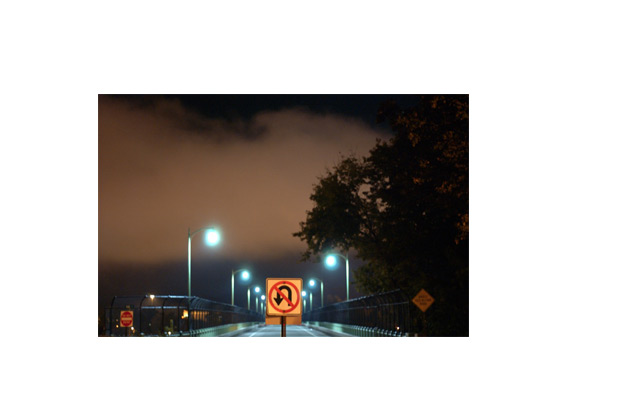
To: Reverse direction. Is that the way?


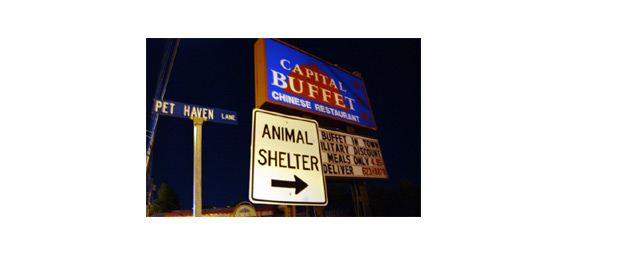
Is This Suppose ta Be Funny?: Did someone think it would be funny to open an animal shelter next to a Chinese restaurant? Or to open a Chinese restaurant next to an animal shelter? Or is this just an occurrence that points to an unfortunate stereotype?


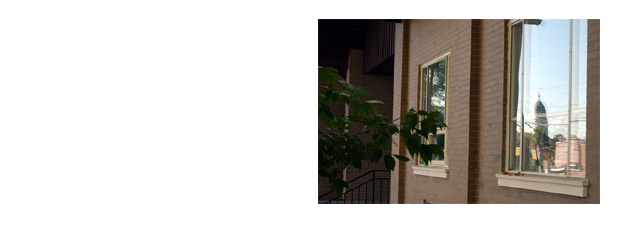
Capitol Reflection: Old use of light for journalism.


Kitchen Window: New use of light for journalism. (At least I've seen it in reconstructive video journalism to signify the 'flashback' or a 'memory.'


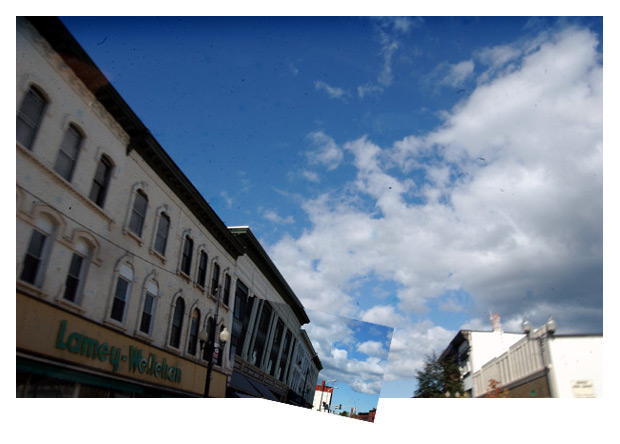
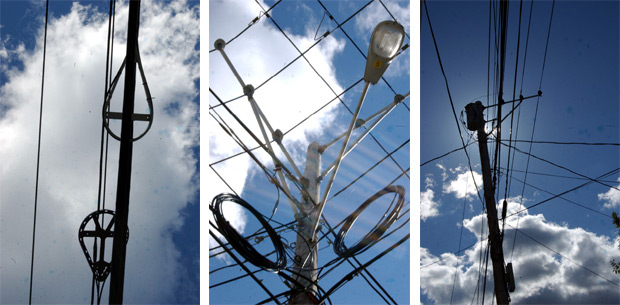
Skyline: Sky lines, Augusta, Maine.


Saints': Michael School, Mary church.


To My Surprise: I went out to my storage unit thinking that I had at least three trips left. Not even. Only a single load. Thanks little truck. Now my day off can be a 'real' day off, sorta.

9/29/2007

Augusta Maine Report, 092807


1.Development on Western Avenue in Augusta, Maine (Sept. 28, 2007)


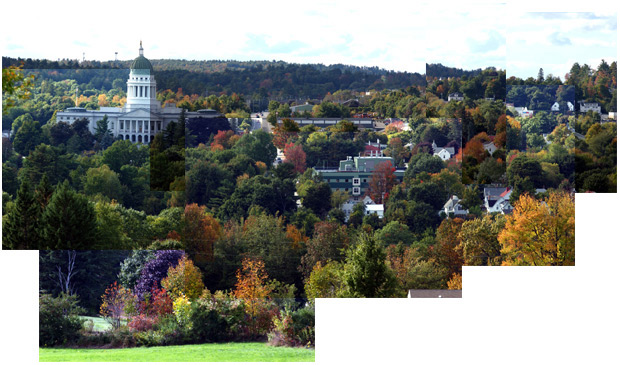
2.The leaves are beginning to change to their Fall colors here in the Capital of Maine.


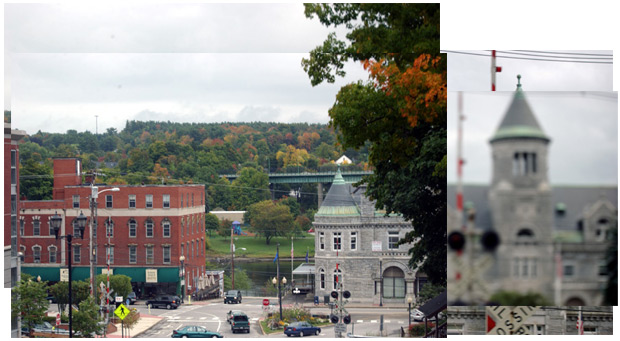
3.Fall foliage coming in across the Kennebec River from the Old Post Office Building in Augusta, Maine.


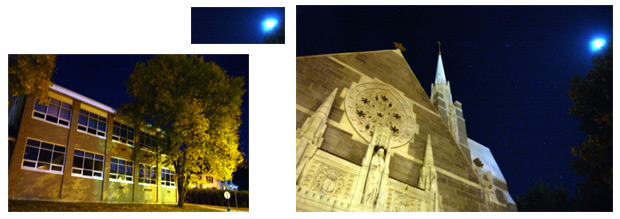
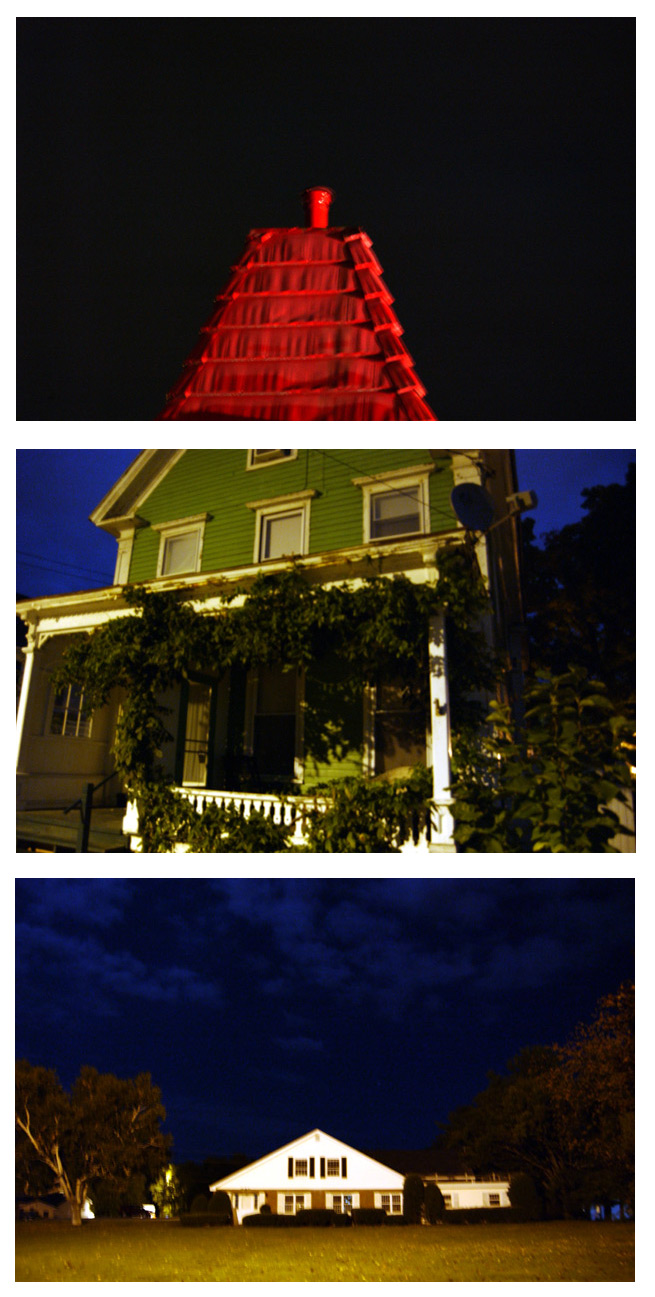
4.RGB: Walking home from work at night is more colorful than you might think.


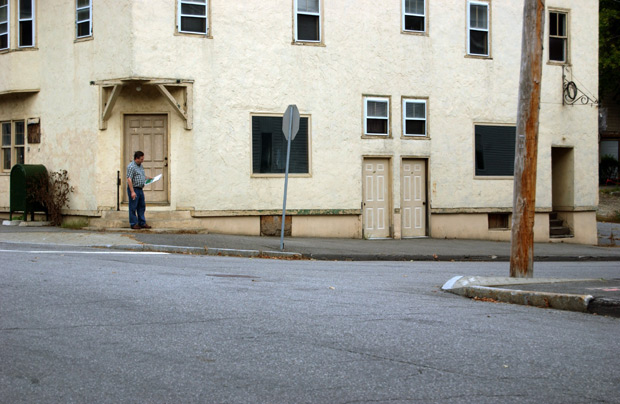
5.A man takes a smoke break and reads a manuscript at the corner of Court and Chapel Streets in Augusta, Maine.


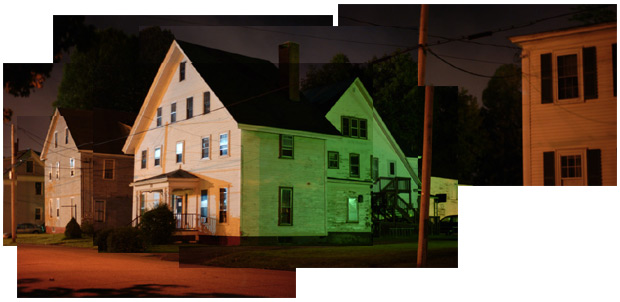
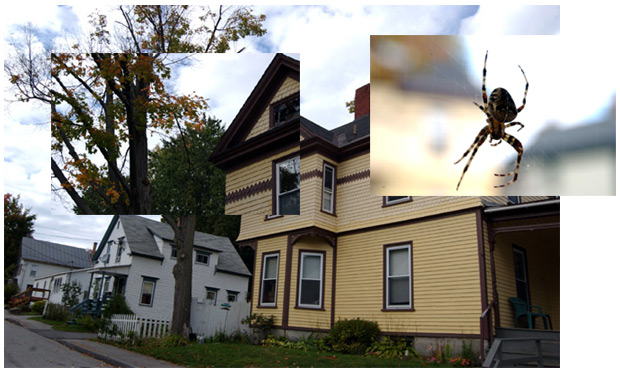
6.A collage view of a house on Weston Street, Augusta, Maine, with a spider in the foreground.

9/28/2007

Your Call Cannot Be Accepted As Dialed


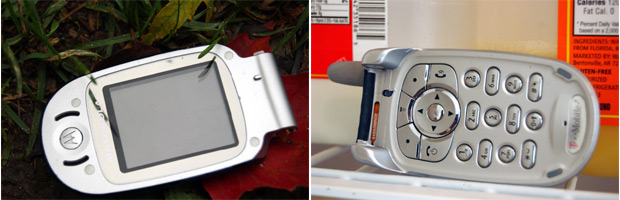
FINGERS DO THE WALKING?: I broke my phone on the rocks in Rockport, ME., a few days ago. I still haven't got it fix or a new phone. It might be a blessing in disguise. I have probably been calling my old friends too much, due to my, yet, lack of friends up here.
(My blog is a way I can communicate with other people, and I have been for 5 years or so now.) I go to the library to get Internet. Lithgow Library is only about a block from my house. And since I work evenings it is opened virtually all of my off hours. My boss says I should get Internet at home so I know what's going on in the world before I get to work. In a way that feels like I would be taking my work home with me. But when I thought about it again, that's what I would do anyway if I had Internet. Plus, since he is eventually requiring it, it is a definite tax write-off.
Doing 'the wire' news at work over the past couple days has made me feel more connected with the outside world. But living in Maine, feeling away from everything, and even having a broken cell phone seems exciting. However, it's just harder to get stuff done.
I'll probably order a new phone over the Internet today. Until I get one I'll continue practicing telepathy. If you feel me tuning into your head, please accept the charges. (Or make a tin foil hat.)

9/27/2007

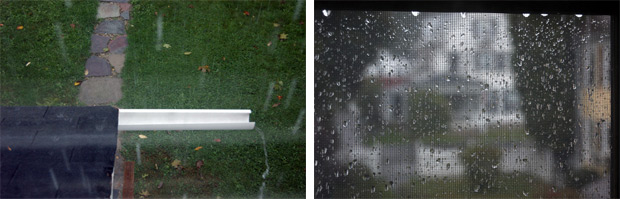
The Rain in Maine: Spout


SPOUT: Oh, the rain in Maine, the rain in Maine, the rain in Maine, the rain in Maine. Oooooh, the rain in Maine, the rain in Maine, the rain in Maine, the rain in Maine. Ohhh, the rain in Maine, the rain in Maine, the rain in Maine, the rain in Maine. Thank You.

9/26/2007

The Wire


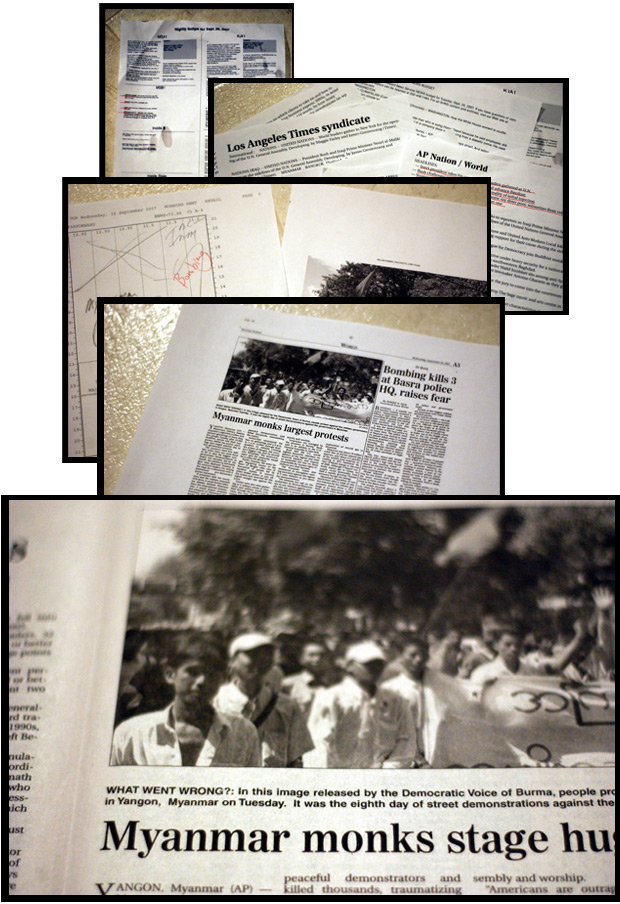
WHAT WENT WRONG?: A lot of stuff. Give me a break. It was my first night doing 'the wire.' That is, taking photos and stories from world and national news outlets, mainly AP, but we run politics from The Post, hard news from The N.Y. Times, national and entertainment from The L.A. Times, Scripps Howard, and other wire stories.
There is a lot involved in putting a page of the newspaper together. That's why I made some mistakes. I like Whistler's legal defense when he was taken to court for not putting enough time into a commissioned piece of art. When the judge asked him how long it had taken him to complete the painting, he replied something like, "My entire life." Meaning that all of the experiences he ever had, all of the painting, laboring, eating, washing, listening, talking, learning, loving- manifests itself in his work. I like to use that explanation for everything I do.
"That sure was a good peanut butter & jelly sandwich, wasn't it?"
So for the past month or so I have been almost-only proofing, that is looking over other copy editors' pages for mistakes in style, design, whatever, just mistakes. You get to learn better how a page is suppose to look proofing.
I actually got the idea to start doing lead-ins on my blog from the photo caption lead-ins we do in the paper. But I forgot to do lead-ins to a couple photos tonight. A couple more nights and I'll be a lot better. It's a repetitive thing. An old lesson; practice makes perfect. It's how humans learn. Very simple.
It is in academics, mechanics, art.
Chan Chao, a documentary photographer and professor at the The George Washington University and the New York School of Visual Arts, used repetition in his 1991(?) portrait book of Burmese rebels, Burma: Something Went Wrong?
Today, history is repeating itself. Repetition: civil unrest. Until we learn to get along with one another, there will be. Again, today, in Myanmar, formerly known as Burma, there is unrest.
We kill each other. That's no way to act. Spread the 'good word;' we should learn to live together. You would think after all of those generations, all that over and over, we would learn.
Say it. Don't Spray It -out of the end of an AK-47!
It doesn't have to come down to 'the wire!'
Chan, thanks for trying!